

Monolithic
Dome Churches
Versatile structures of worship
by David B. South Reprint from the 2000 Summer Roundup
 David B. South, President of the Monolithic Dome Institute |
Church construction became part of our business in 1983 when we built a 3000-seat sanctuary in South Bend, Indiana for LeSEA Ministries. After LeSEA, came Maranatha Church in Mont Belvieu, Texas, Living Stones Church in Alvin, Texas and New Life Christian Church in Southgate, Michigan. Many more have followed.
There are several compelling reasons for building Monolithic Domes as churches.
The cost of the structure is less than or comparable to conventional structures. This is especially true for larger facilities requiring larger sanctuaries. Not only is the construction cost more affordable, but the energy savings are huge and well documented. They literally pay for the church over a short period of time.
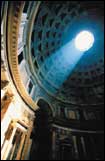
A dome delivers a church feel. Domes have been part of church heritage for centuries. Some historic domes include the Pantheon built in A.D. 126, Hagia Sophia in Constantinople, Dome of the Rock, St. Peter?s Basilica and more. These domes were originally built for the same reason as they are today: Domes providing large spans can be built for a lot less money than other conventional structures.
Monolithic Domes are column free which provides extremely efficient circular or semicircular seating and focuses attention on the lectern. Many large churches are square buildings with round seating. It is much more efficient to build a round building.
Architectural Freedom
Clear spans allow architects to design without worrying about roof supports, columns, or other structural limitations. Architects designing churches are catching on to this; they are utilizing the strength of the dome, not only for energy savings, but to carry sound and lighting equipment off the dome?s shell. Several architects have designed Monolithic Dome churches. For an active list, refer to www.domebuilders.com/designers.
Monolithic Domes vs. Metal Buildings
In the church market, the metal building is the only structure which can compete in bottom-dollar-cost. But any savings that occur by using a metal building are usually quickly lost to higher energy and insurance costs.
Church Financing
A major problem in the construction of any building is financing. This certainly applies to churches. Bill Calhoun of Ilex Consulting Company, Inc. in Houston (713-218-8272 or toll free 1-877-451-8272 ext. 104) has been instrumental in funding several churches. His financing is available to all churches.
Obviously other financing is available from banks, bondsmen, etc. Fund raising is the classical option. In general, churches should not build too far into the future. In other words, if the congregation is 500, then consider building a church with seating capacity for 600 or 700, not 2000 or 3000. Fund raising is far easier when there is a visible need. The church that builds too large has a hard time creating the urgency to pay for it. Funding for expansion is easier if it is obviously needed i.e. by being overcrowded.
The use of the Monolithic Dome makes it very easy to build in modular steps. For example, the sanctuary of correct size can be converted into classrooms as it is outgrown or a new larger sanctuary can be converted into a school later.

A Simple, Multipurpose Sanctuary
Pictured to the left is a thumbnail of a sketch of a medium-sized, growing church designed by Shade O?Quinn. (click on image to enlarge) It has been designed as a multipurpose facility which can be used as a recreation or basketball facility during the week and as a sanctuary on Sunday. It makes a great entry into a larger church complex or a stand-alone facility.
Multiple Uses
It is important that the spaces within the facility be considered for the high use that these churches receive ? sometimes as often as seven days a week. They could have classrooms, offices, scouting, women?s programs, educational programs, and youth programs. All of these put a strain and wear and tear on any facility. Heating and cooling is needed virtually everyday. Therefore, the buildings need to be permanent structures of the best quality.
Multiple use is as it should be. The church has become a center for the community?people sharing like beliefs, similar interests, and very often social lives, in addition to religious worship. Churches designed with multiple buildings provide effective space for the varied functions they must house.
Small churches that start with a single dome and add more domes as need and funding become available are very appropriate. Therefore, it is incumbent on the church to get a fairly substantial piece of property at the outset. This is not mandatory ? oftentimes a facility can be sold and a newer, larger dome built when the congregation grows.
All of the advantages of a Monolithic Dome make the decision of what type of structure to build for a church an easy one. However, with any type of building project, there will be hurdles and challenges to overcome. Your challenges might be financial, or perhaps you have yet to acquire the needed land. Whatever the challenges, The Monolithic Dome Institute can help you find solutions to roadblocks you might encounter on your way to a beautiful, cost-effective and safe facility.
 |
|